
Every SaaS company exploring federal government sales has heard the pitch: "FedRAMP unlocks a $100+ billion market!" What they often don't hear until much later is that the journey to FedRAMP authorization can consume 12-24 months, cost $500K-$1M+, and fundamentally reshape how your engineering team thinks about infrastructure. The gap between FedRAMP marketing and FedRAMP reality catches many companies off guard.
That said, FedRAMP authorization remains one of the most valuable competitive moats a B2B SaaS company can build. Once authorized, you gain access to federal agencies, state and local governments that accept FedRAMP reciprocity, and enterprise customers who view it as the gold standard for cloud security. The question isn't whether FedRAMP is worth pursuing—it's whether your company is ready to pursue it now, and which path makes sense for your situation.
This guide provides an honest assessment of what FedRAMP authorization actually requires in 2026, including recent changes from the FedRAMP 20x initiative, real cost breakdowns, and a practical readiness checklist. Whether you're responding to inbound interest from a federal agency or proactively targeting government as a growth market, you'll leave with clarity on the decision ahead.
The FedRAMP program has undergone significant evolution over the past two years. If your understanding of the process comes from content published before 2024, much of it is now outdated. Here's what's genuinely new and relevant for companies starting their journey today.
Launched in late 2024 and expanded throughout 2025, the FedRAMP 20x initiative represents the most significant modernization of the program since its inception. The name refers to the goal of making authorization "20 times faster" for qualifying cloud services. While that's marketing language, the underlying changes are substantial.
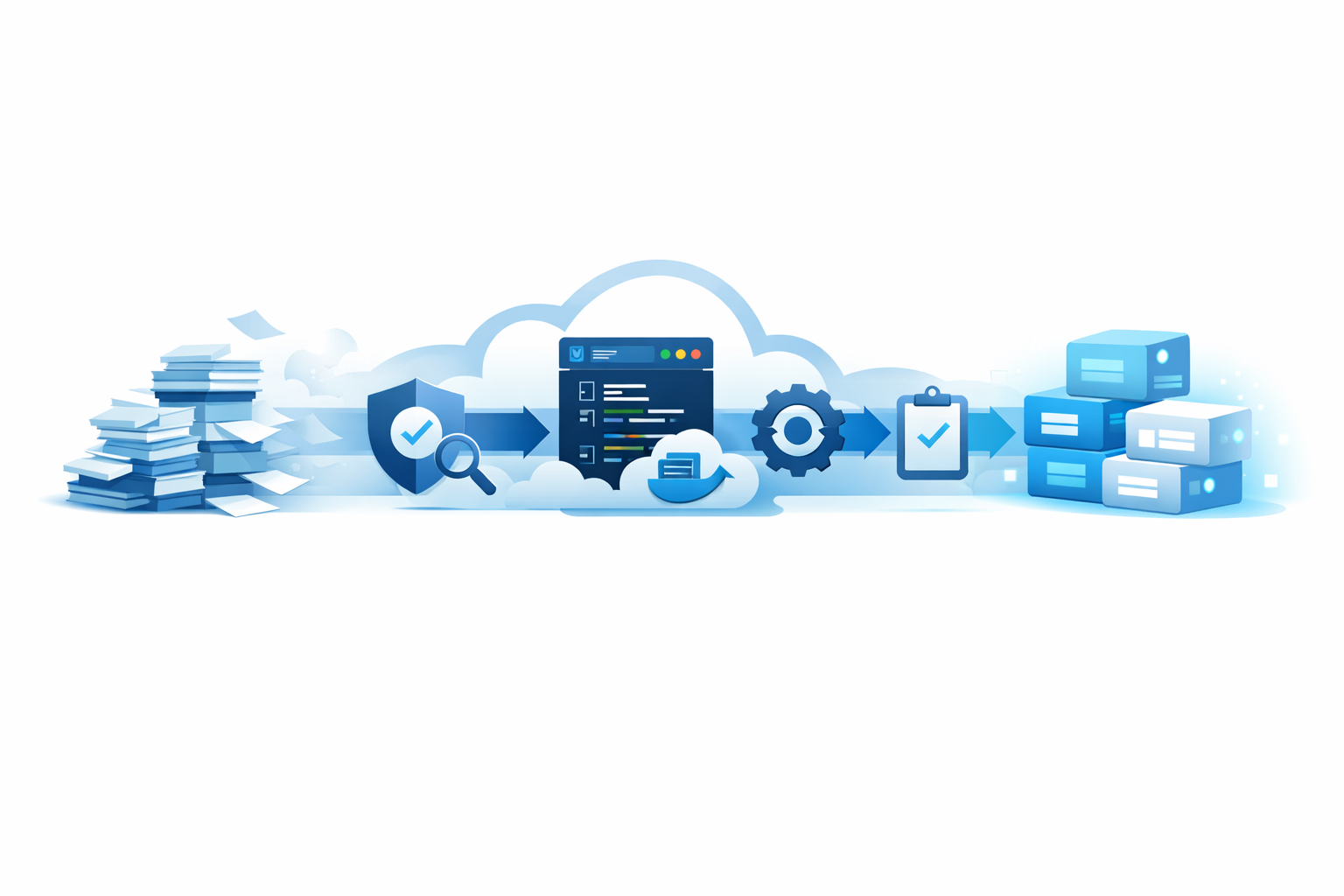
The 20x program introduces a tiered approach that recognizes modern cloud-native architectures deserve a different assessment methodology than legacy systems. Cloud services built on infrastructure-as-code, with automated security controls and continuous compliance monitoring, can qualify for an accelerated path that emphasizes automated evidence collection over manual documentation.
Key eligibility criteria for the 20x accelerated path include:
For companies that meet these criteria—and this describes most modern SaaS architectures—the 20x path can potentially reduce authorization timelines from 12-18 months to 3-6 months. However, the bar for "automated compliance evidence" is higher than many teams initially expect.
The 2025-2026 control baselines reflect increased focus on supply chain security, API security, and zero-trust architecture principles. New controls around software bill of materials (SBOM), container security, and third-party dependency management have been added or strengthened.
For engineering teams, this means your CI/CD pipeline, dependency management, and container orchestration choices now have direct compliance implications. Teams using platforms that provide clear separation between application code and infrastructure—with auditable configuration management—will find these requirements easier to satisfy than those with bespoke infrastructure setups.
FedRAMP offers multiple paths to authorization, each with different timelines, costs, and strategic implications. Choosing the right path is one of the most consequential early decisions you'll make.
The Agency path requires a federal agency sponsor who agrees to be your first customer and work with you through the authorization process. This is typically the fastest path for companies with existing federal relationships.
Timeline: 6-18 months from engagement to Authorization to Operate (ATO)
Best for: Companies with an agency actively requesting their service, or with strong federal relationships through sales or partnerships
Key consideration: Your sponsor agency's security team becomes a critical dependency. Their review timeline and priorities directly impact yours. Some agencies move quickly; others have authorization backlogs measured in quarters.
The JAB path involves authorization by the Joint Authorization Board, composed of representatives from DoD, DHS, and GSA. A JAB Provisional Authorization to Operate (P-ATO) is considered the "gold standard" and is accepted by any federal agency.
Timeline: 12-24 months, with significant variability based on queue position and assessment findings
Best for: Companies targeting multiple federal agencies, or those where a JAB P-ATO would significantly accelerate subsequent agency adoptions
Key consideration: The JAB has limited capacity and prioritizes services with broad applicability across the federal government. Entry is competitive, and the review process is more rigorous than agency-specific authorization.
The newest option, the 20x path is designed for cloud-native applications that can demonstrate automated compliance capabilities.
Timeline: 3-6 months for qualifying applications
Best for: Modern SaaS applications built on cloud-native infrastructure with mature DevSecOps practices already in place
Key consideration: Eligibility requirements are strict. You need working automation, not plans to build it. Companies that have invested in infrastructure-as-code, automated security scanning, and continuous monitoring are well-positioned. Those starting from scratch will likely spend 6-12 months building the automation before they can begin the accelerated assessment.
Beyond authorization path, you must select the appropriate impact level for your system:
Most B2B SaaS companies pursue Moderate Impact authorization. If a federal agency is specifically requesting High Impact, expect substantially higher costs and longer timelines—this is a fundamentally different undertaking.
FedRAMP cost estimates vary wildly across the internet because the real answer is "it depends." Here's a realistic breakdown for a Moderate Impact SaaS authorization in 2026, based on common patterns we've observed.
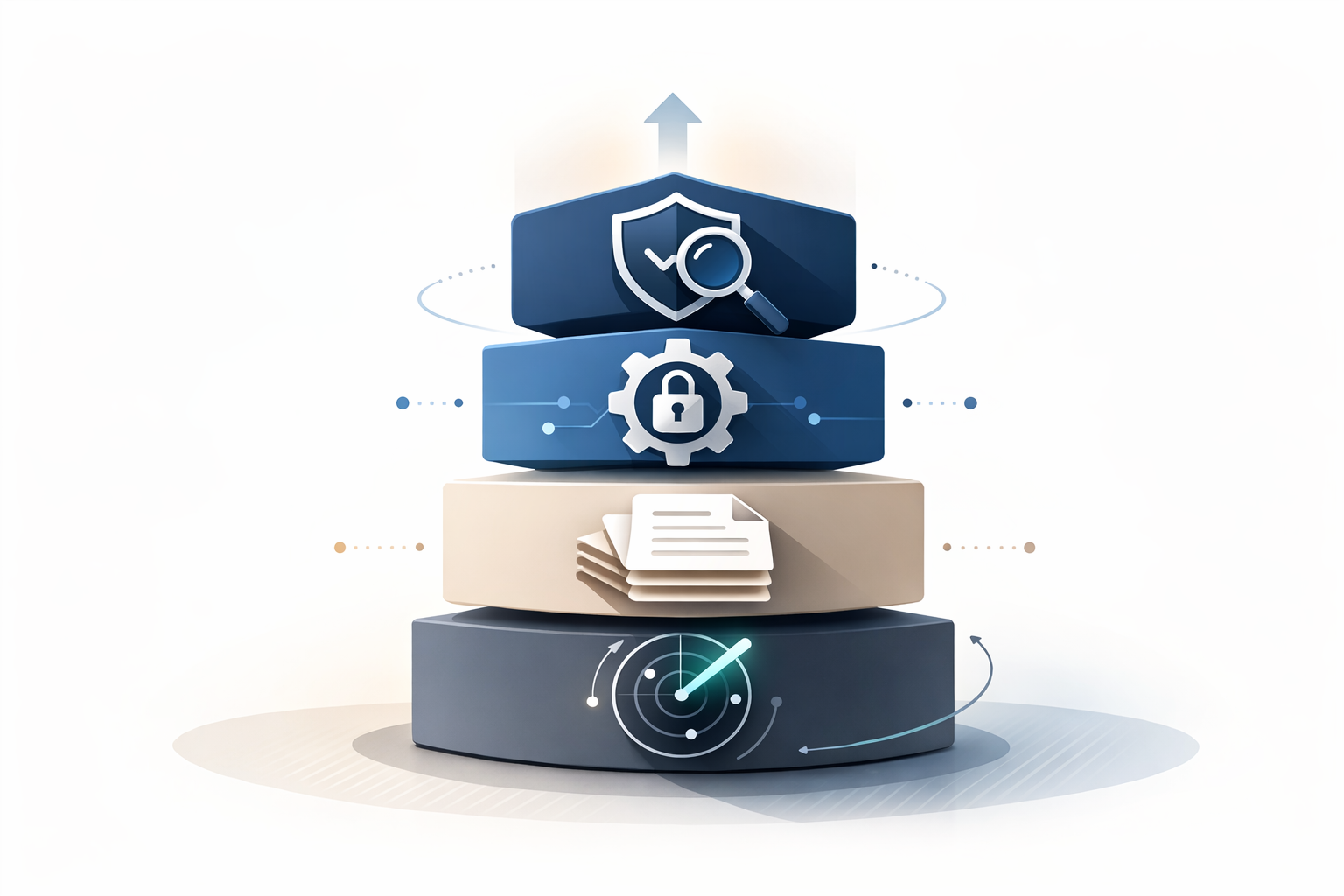
A 3PAO assessment is required regardless of authorization path. These assessments include security control evaluation, penetration testing, and documentation review.
Initial assessment: $100,000 - $300,000
The range depends on system complexity, number of services in scope, and the 3PAO you select. Boutique assessors may offer lower rates but have capacity constraints. Larger firms charge premium rates but may have more FedRAMP-specific experience.
Annual reassessment: $75,000 - $150,000
FedRAMP requires specific security tooling for vulnerability scanning, configuration management, log aggregation, and continuous monitoring.
Initial setup: $50,000 - $150,000
Annual operating costs: $50,000 - $150,000
Companies with mature security tooling already in place will be at the lower end. Those needing to implement SIEM, vulnerability management, and compliance automation from scratch will be higher. If you're running in a dedicated GovCloud environment, add infrastructure costs of $50,000-$200,000+ annually depending on scale.
The System Security Plan (SSP) alone can run 300-500+ pages. Add to that policies, procedures, incident response plans, and continuous monitoring documentation.
Consulting approach: $100,000 - $200,000 for experienced FedRAMP consultants to develop documentation and guide the process
Internal approach: 1-2 FTE years of dedicated effort, plus opportunity cost of engineering time diverted to compliance work
Continuous monitoring requirements don't end at authorization. Monthly vulnerability scans, quarterly reviews, annual assessments, and POA&M (Plan of Action and Milestones) management are ongoing obligations.
Annual cost: $100,000 - $200,000 in combined tooling, personnel, and 3PAO costs
Many companies underestimate ConMon costs. The "authorization is just the beginning" reality catches teams off guard when they realize maintaining authorization requires permanent headcount or ongoing consulting engagement.
For a typical Moderate Impact SaaS authorization:
Year 1 (authorization year): $350,000 - $800,000
Ongoing annual: $200,000 - $400,000
These numbers assume you have competent engineering and security teams in place. If you're hiring specifically for FedRAMP, add those salaries. If you're building security infrastructure from scratch, add those capital costs.
Beyond the headline costs and timelines, several technical requirements consistently catch engineering teams off guard. Understanding these early allows you to make infrastructure decisions that support rather than complicate your FedRAMP journey.
Your "authorization boundary" defines exactly what's in scope for FedRAMP. Everything inside the boundary must meet FedRAMP requirements. Everything outside must be documented as an external dependency with appropriate security considerations.
Boundary definition is where infrastructure architecture decisions become compliance decisions. Teams using managed platform services need to clearly understand which components they control versus which are inherited from their cloud provider. Teams running on platforms like Convox benefit here because the boundary between application concerns and infrastructure concerns is well-defined—your application code and configuration are yours, while Convox handles the underlying orchestration within your own cloud account.
A clearly defined boundary dramatically simplifies documentation and reduces audit scope. A fuzzy boundary leads to scope creep, where assessors keep finding additional components that need to be included.
The 2025-2026 control requirements place significant emphasis on software supply chain security. You'll need to document:
For teams using containerized deployments, this means your Dockerfile provenance, base image selection, and build pipeline become compliance-relevant. A typical convox.yml service definition implicitly creates documentation requirements:
services:
  web:
    build: .
    port: 443
    health: /health
    scale:
      count: 2-10
      cpu: 512
      memory: 2048
That build: . directive means you need documented control over your Dockerfile, base images, and build process. Teams using infrastructure-as-code benefit from having these definitions version-controlled and auditable.
ConMon isn't just "run a vulnerability scan monthly." It's a comprehensive program including:
The 20x program raises the bar further by requiring automated evidence generation. You need systems that can prove compliance continuously, not just at assessment time.
FIPS 140-2 (and increasingly FIPS 140-3) validated encryption is required for data at rest and in transit. This isn't just "use TLS"—it's "use TLS with FIPS-validated cryptographic modules."
Running in AWS GovCloud simplifies this since AWS provides FIPS endpoints. Running in commercial AWS regions requires additional configuration to ensure FIPS-compliant encryption throughout your stack. Your platform choice significantly impacts the complexity here.
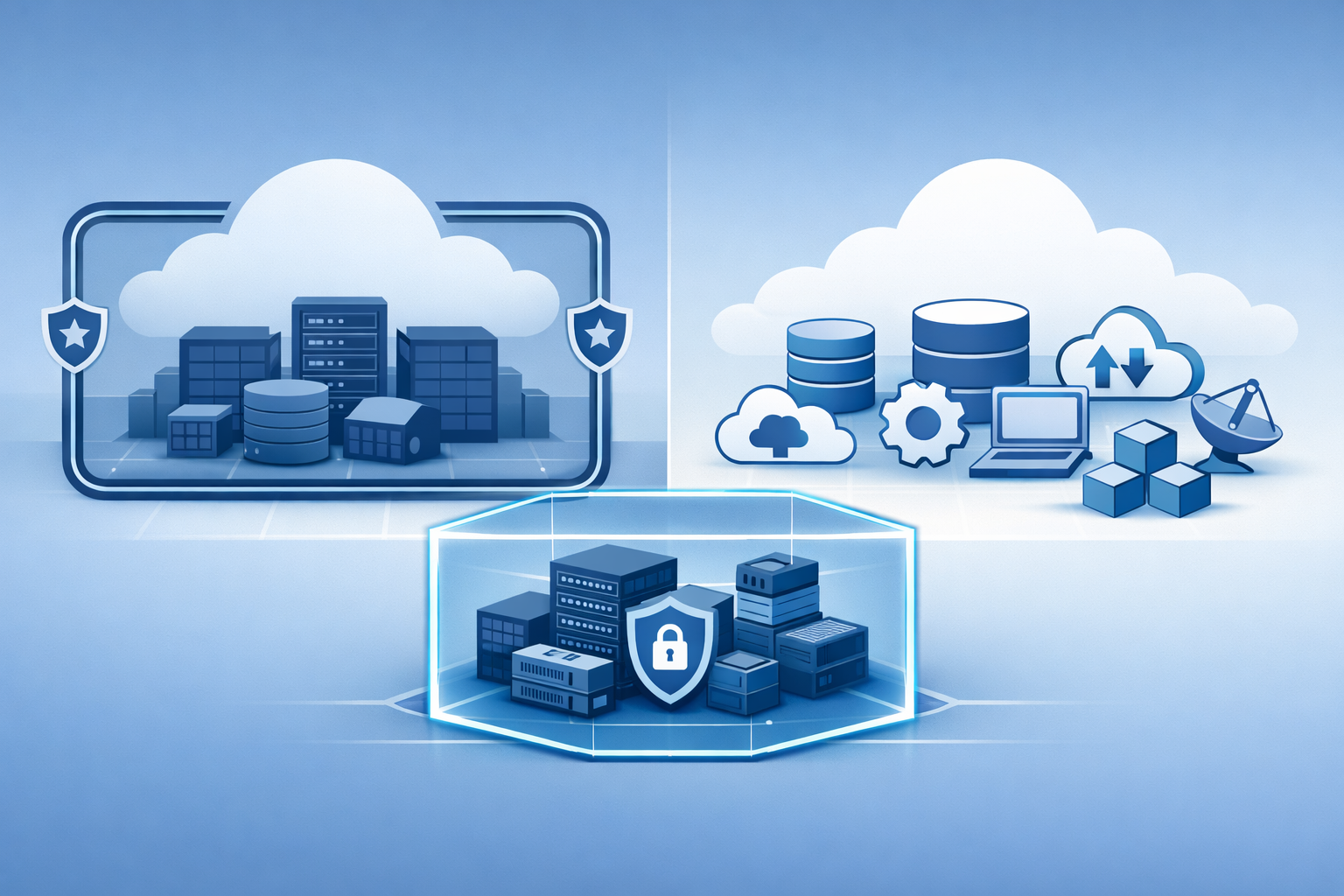
One of the most consequential early decisions is where to host your FedRAMP environment.
Advantages:
Disadvantages:
Advantages:
Disadvantages:
Regardless of cloud region, having clear control over your infrastructure significantly impacts your FedRAMP journey. The authorization boundary must be clearly defined, and you need to demonstrate control over everything inside it.
Platforms that run within your own cloud account—rather than multi-tenant shared infrastructure—simplify boundary definition. When your Kubernetes cluster, load balancers, and databases exist in your AWS account, you can clearly document what you control versus what you inherit from AWS. Convox's BYOC model exemplifies this approach: you get platform-level abstractions for deployment and operations while maintaining full ownership of the underlying infrastructure in your own cloud account.
This ownership model also simplifies audit scope. Assessors can examine your specific infrastructure configuration rather than trying to assess a shared platform that serves multiple tenants with different compliance requirements.
If you're considering FedRAMP authorization, here's a practical timeline for preparation work that should happen before you engage a 3PAO or commit to an authorization path.
convox.yml provides application-level IaC; ensure your Rack parameters are similarly documented.This 12-month preparation timeline positions you to begin formal assessment with a mature security posture. Attempting to compress this timeline typically results in extended assessment periods, more findings to remediate, and ultimately longer time-to-authorization.
FedRAMP authorization is a significant undertaking that makes strategic sense for companies meeting certain criteria:
If you're missing these criteria, it may make sense to delay FedRAMP pursuit while you build the necessary foundation. A failed or abandoned authorization attempt wastes resources and can damage federal relationships.
The FedRAMP 20x program has genuinely accelerated timelines for qualifying companies, but it hasn't eliminated the need for mature security practices—it's raised the bar for what "mature" means. Companies with modern cloud-native architectures, automated compliance capabilities, and clear infrastructure control are better positioned than ever. The question is whether that describes your company today, or whether you need to invest in reaching that state before pursuing authorization.
FedRAMP authorization remains one of the most valuable investments a B2B SaaS company can make for accessing the government market. The process has evolved significantly—the 20x initiative offers genuine acceleration for qualified applications, but the underlying requirements for security maturity, documentation rigor, and ongoing compliance commitment remain substantial.
The infrastructure decisions you make today directly impact your FedRAMP journey. Running on a platform that provides clear infrastructure control within your own cloud account simplifies boundary definition, audit scope, and ongoing compliance management. Convox's architecture—deploying into your AWS, GCP, or Azure account with full infrastructure visibility—is designed for exactly these compliance-critical scenarios.
If you're evaluating how your infrastructure choices support government compliance requirements, our team has experience helping companies navigate these decisions. You can explore Convox's Getting Started Guide to understand how the platform works, or contact our team to discuss compliance-specific requirements.
Console accounts are free, and you can create your first Rack in your own cloud account in minutes. For enterprises with FedRAMP or other compliance requirements, we're happy to discuss how Convox can support your authorization journey.


